
New Long COVID Framework Challenges the Search for One Single Cause
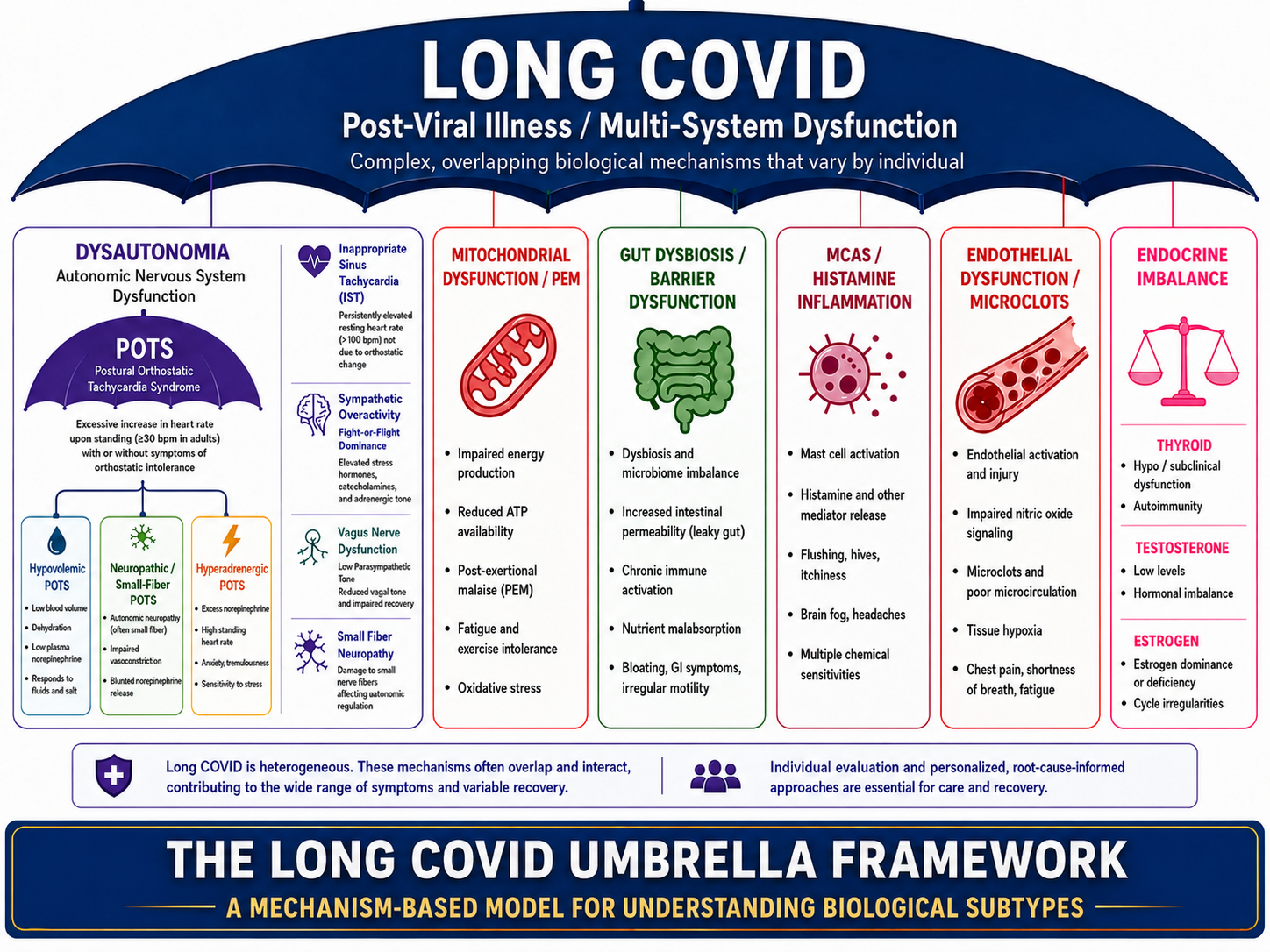
Long COVID umbrella
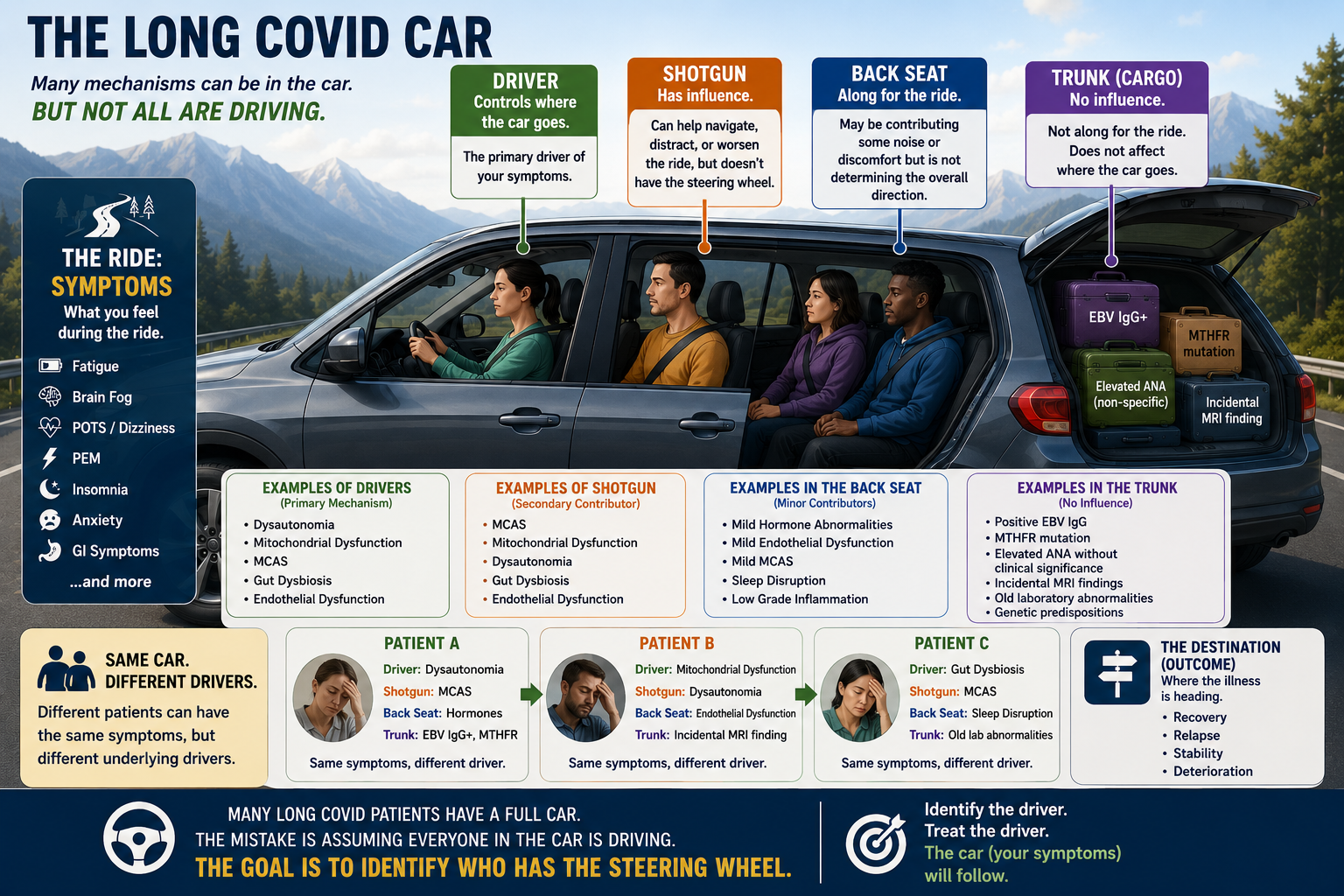
Long COVID car
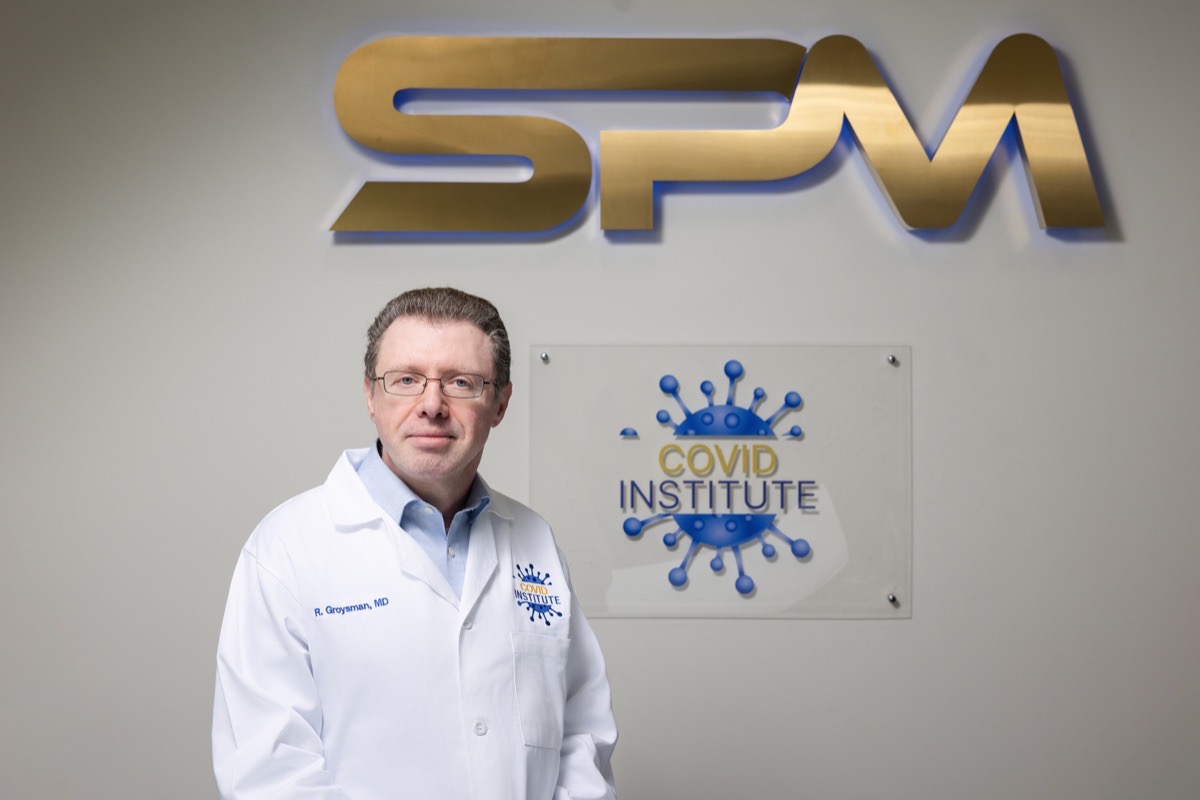
Robert Groysman | Covid Institute
Dr. Robert Groysman introduces an umbrella-and-puzzle model to explain why Long COVID research may apply to specific biological subsets, not every patient.
The umbrella is Long COVID. The puzzle pieces are symptoms behind the mechanisms. The goal is not to force every patient into one cause. It is to identify which pieces are active in the patient.”
PLANO, TX, UNITED STATES, June 22, 2026 /EINPresswire.com/ -- PLANO, TX — June 22, 2026. Long COVID is often discussed as if researchers are hunting for one all-encompassing cause. According to Dr Robert Groysman, MD, this assumption might be one of the biggest reasons patients, clinicians, and the public misread emerging research.— Robert Groysman, MD
Dr. Groysman is introducing a three-part framework, viewing Long COVID not as a single-cause, but as a broad biological umbrella consisting of multiple overlapping puzzle pieces. Under the umbrella sit different combinations of biological drivers, among them dysautonomia, mitochondrial dysfunction, endothelial dysfunction, immune activation, viral persistence or reactivation, mast cell activation, gut dysbiosis, hormonal disruption, small fiber neuropathy, and other interacting pathways.
“The problem is not that researchers are wrong,” said Dr. Groysman. “The problem is that people hear a subset finding as if it applies to all of Long COVID. A study may identify an important mechanism in one group of patients, but that does not mean it has found the single cause.”
The model separates the broad diagnosis of Long COVID from the mechanisms driving symptoms in different patients. One patient may primarily have dysautonomia and sympathetic overdrive. Another may have endothelial dysfunction and microvascular impairment. Another may have immune activation or viral reactivation. Many can have several symptoms active at once. That is why two patients can have different symptoms, triggers, lab findings, and treatment responses while sharing the same diagnosis.
“The umbrella is Long COVID,” said Dr. Groysman. “The puzzle pieces are symptoms behind the mechanisms. The goal is not to force every patient into one cause. It is to identify which pieces are active in the patient.”
Many studies investigate a single pathway, whether viral persistence, autoimmunity, microclots, immune dysregulation, autonomic dysfunction, or mitochondrial impairment. These studies can be valuable, but each is usually studying one piece of the puzzle. A researcher may be asking, “What is driving Long COVID in this biologically selected subset?” The public may hear, “Researchers have found the cause of Long COVID.” That missing phrase, “in this subset,” matters.
If Long COVID is treated as one uniform illness, real biological signals can be missed or diluted. A treatment targeting endothelial dysfunction may fail in a broad, mixed population if only a subset actually has it. A mitochondrial treatment may look weak if many enrolled patients lack a dominant energy-recovery problem. A dysautonomia treatment may be lost when POTS and sympathetic-overdrive patients are mixed with patients whose drivers are different.
The framework argues future research should move toward enriched biological endotypes. Instead of enrolling patients only because they carry the broad label, studies should identify which biological pattern is present. An endothelial study should enrich for vascular, clotting, or capillary markers. A dysautonomia study should enrich for orthostatic intolerance, POTS physiology, or autonomic testing abnormalities. A mitochondrial study should enrich for post-exertional energy failure and delayed recovery. This does not make the broad diagnosis meaningless, but more precise. The better question is not “Does this treatment work for Long COVID?” but “Which Long COVID endotype is this treatment designed for?”
Dr. Groysman also uses a “Long COVID Car” model to explain why patients can share symptoms but require different treatments. The car can have many passengers but only one is driving. The driver is the mechanism steering the illness. The passenger influences the driver, the back seat adds noise, and the trunk holds findings present but not currently driving symptoms. Fatigue, brain fog, dizziness, anxiety, and post-exertional crashes can look the same across patients. But in one person dysautonomia is at the wheel. In another, mitochondrial dysfunction. In another, mast cell activation, gut dysbiosis, or hormonal disruption. The mistake is assuming every mechanism found in the car is driving. The goal is to find who has the steering wheel.
Research does not need to choose one explanation. Viral persistence may be real in one group, autoimmunity in another, microclotting in another, dysautonomia in another. In many patients several pieces interact. Dysautonomia can affect gut motility. Gut dysbiosis can amplify immune activation. Immune activation can affect the endothelium. Endothelial dysfunction can impair oxygen delivery. Sympathetic overdrive can keep the body stuck in a chronic alarm state. In this model, Long COVID is not a single switch. It is a network disorder in which different pieces lock together and keep the body from returning to baseline.
Dr. Groysman developed the framework to help patients and clinicians understand symptoms and underlying mechanisms. When a new study reports a Long COVID finding, the question should not be “Is this the cause?” but “Which subgroup does this apply to?” That distinction may help prevent patients from being misled by oversimplified headlines. It may also help researchers design better studies, avoid diluted results, and identify the patients most likely to respond to mechanism-targeted treatment.
About the Framework
Dr. Groysman’s three-part framework presents Long COVID as a biologically heterogeneous condition requiring mechanism-based classification. The published component appears in *Frontiers in Medicine* (“Long COVID as a network disorder,” 2026; DOI: 10.3389/fmed.2026.1841690), with two related manuscripts in development. Together the framework uses an umbrella model, a puzzle-piece model, and a network-based approach to explain why Long COVID may require subgroup-specific research and personalized clinical interpretation.
About The COVID Institute
The COVID Institute in Plano, Texas, specializes in Long COVID and post-viral condition diagnosis and treatment under the direction of Dr. Robert Groysman. The practice applies a six-mechanism framework that addresses dysautonomia, mitochondrial dysfunction, endothelial damage, gut dysbiosis, mast cell activation and hormone imbalance. Media inquiries: press@longcovidfamily.com
Dr. Robert Groysman
Covid Institute
+1 214-390-7557
email us here
Visit us on social media:
Facebook
Instagram
X
YouTube
LinkedIn
Legal Disclaimer:
EIN Presswire provides this news content "as is" without warranty of any kind. We do not accept any responsibility or liability for the accuracy, content, images, videos, licenses, completeness, legality, or reliability of the information contained in this article. If you have any complaints or copyright issues related to this article, kindly contact the author above.
